Root canal or dental implant?
If a tooth is in trouble, you may be weighing up saving it with root canal treatment against removing it and placing an implant. Both are good options — the question is which is right for your tooth.
Two good options, different jobs
Root canal treatment keeps your natural tooth; a dental implant replaces one that has already been removed. So the first question is usually whether the tooth can be saved predictably in the first place.
Why saving the natural tooth comes first
Nothing quite matches your own tooth, with its natural attachment and feel. Keeping it avoids the surgery of removing a tooth and preserves the surrounding bone and gum. Where the outlook is good, root canal treatment is the more conservative route.
Your own tooth as a 'pre-implant'
There's a point that's often overlooked. Where a tooth has a large infection around its root, treating it endodontically gives that infection a chance to heal while the natural tooth — and the bone that supports it — is kept in place. In effect, the tooth is doing the job of a 'pre-implant': holding the site and preserving the bone, rather than removing the tooth and leaving a defect that often needs bone grafting before an implant can be placed. So even when an implant may eventually be needed, saving and healing the tooth first protects the foundation and keeps your options open.
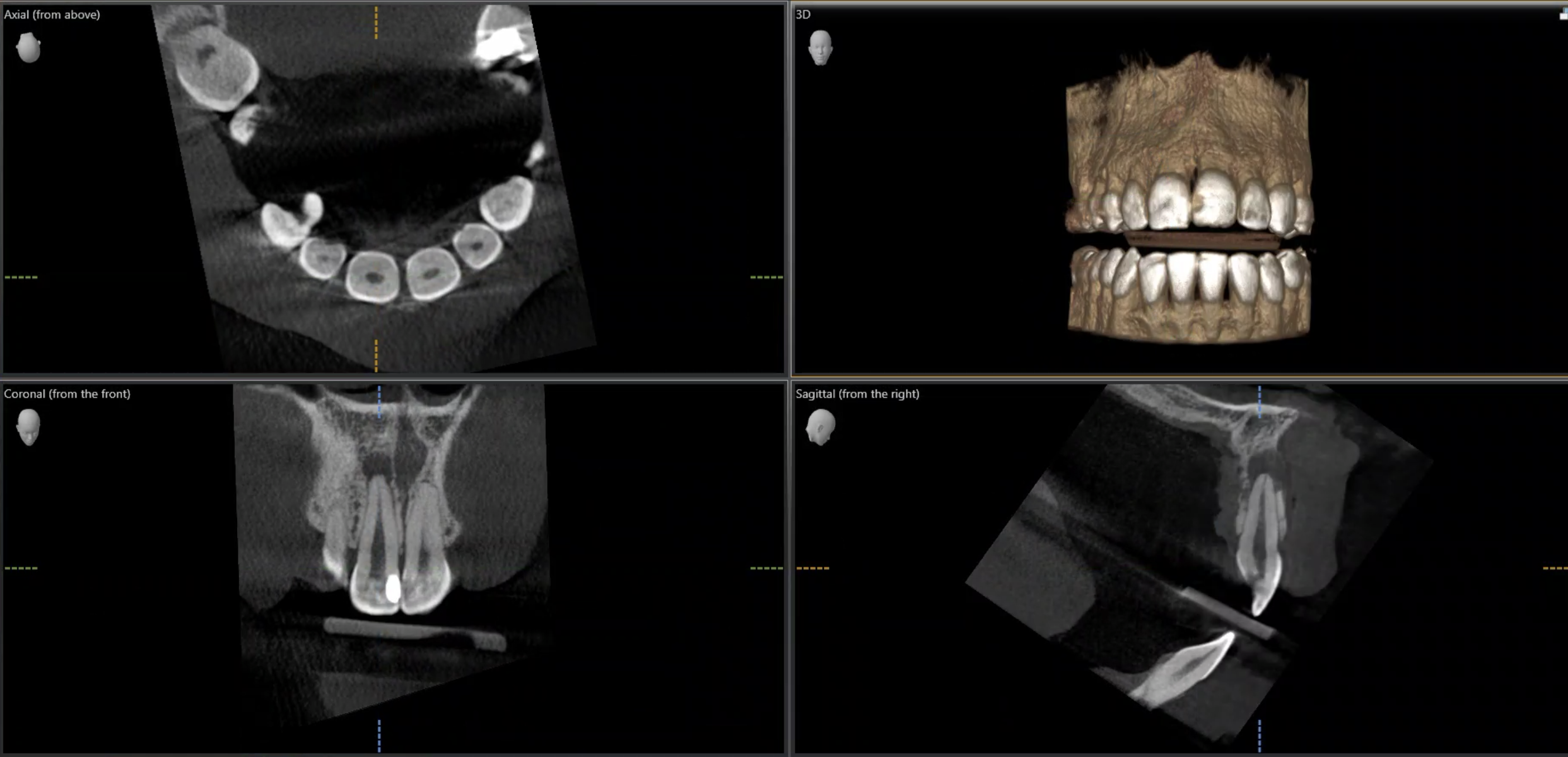
A CBCT scan builds a 3D picture of the tooth and the bone around it, from every angle — the detail that makes precise, predictable treatment possible.
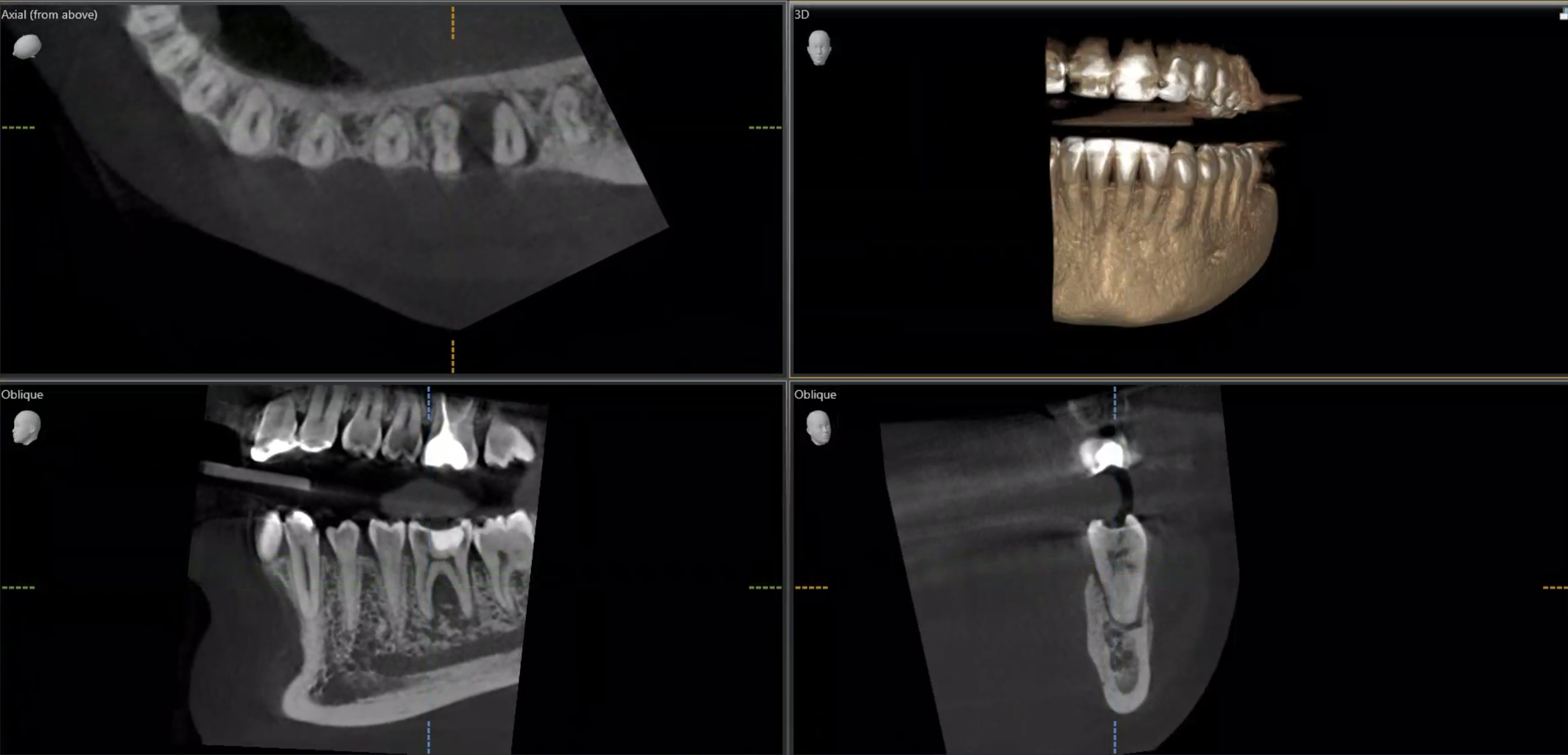
Before treatment
After treatment
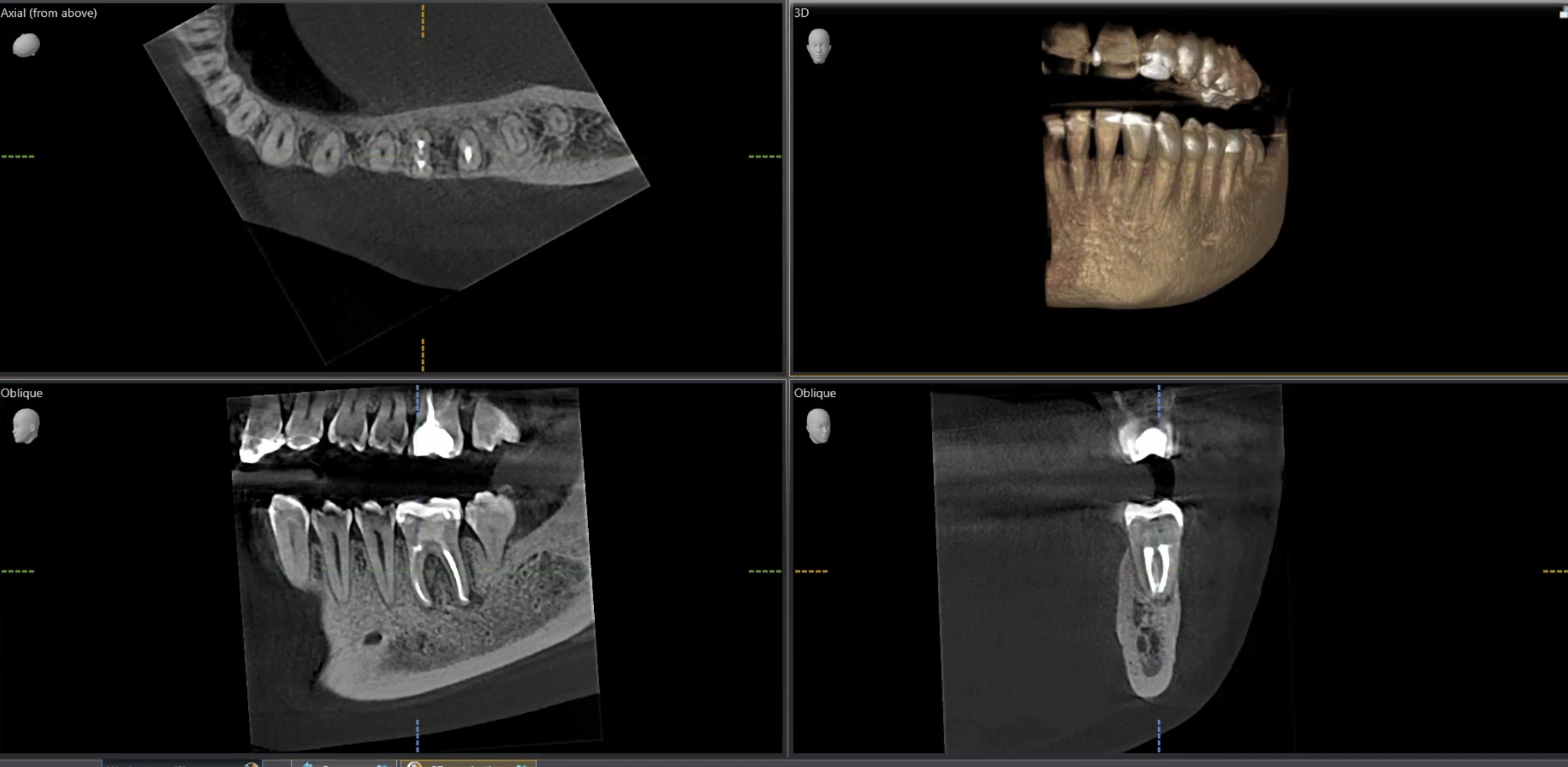
An example of periapical healing and bone recovery following root canal treatment. Individual results vary.
When an implant is the better choice
Implants have a strong, well-established role in modern dentistry, and they're an excellent solution when a tooth genuinely can't be saved — too fractured or unrestorable, or with a poor long-term prognosis. In those cases an implant restores function and appearance very effectively.
How the two compare
Both have high success rates in the right cases. Root canal treatment is usually quicker, non-surgical and less costly up front; an implant is a surgical procedure placed over several months and generally costs more, but gives a durable long-term result. Neither is 'better' in the abstract — it depends on the tooth, and often on the save-or-remove decision that comes first.
Honest, unbiased advice
My role is to assess whether your tooth can be saved and tell you straight. If it can be saved well, that's what I'll aim to do; if an implant is genuinely the better path, I'll say so and can discuss it with your dentist. The goal is the right result for you.
Get in touch