Dropdown
Treatments · London Endodontics

Everything I do is focused on one thing - keeping your natural tooth.

Root canal treatment has an unfair reputation. In experienced hands, with the right equipment, most patients are surprised by how manageable it is. Treatment is completed in a single visit wherever the case allows.

01
Tooth assessment
Before any decision is made, I assess the tooth and give an honest prognosis - using CBCT imaging where it's indicated. There's no obligation to proceed, and your referring dentist receives a full report either way.
02
Root canal treatment
Treatment carried out under a dental operating microscope to enhance visualisation, for all tooth types, completed in a single visit in the majority of cases. Your dentist receives a full written report once treatment is complete.
03
Root canal re-treatment
Previous treatments that have failed, calcified or missed canals, and other complex cases. I'll always give you an honest view of the prognosis before we begin.
04
Trauma management
Acute and historic dental trauma, including avulsion management, with long-term follow-up and close liaison with your referring dentist throughout.
05
CBCT reporting
A full written clinical report from 3D imaging, including pre-surgical assessment. Existing scans are accepted, and the report is sent directly to your referring dentist.
06
Intravenous sedation
For anxious patients, IV midazolam sedation leaves you conscious but deeply relaxed. This is provided by Dr Damien Reilly, Consultant in Special Care Dentistry, who travels to all seven practices.
How I work

The technology behind better outcomes.

Two things make modern endodontics far more predictable than it used to be - and I use both as standard, on every case that needs them.

The dental operating microscope
Root canals are tiny, complex spaces. Working under high magnification with dedicated lighting, I can see detail that's simply invisible to the naked eye - extra canals, fine cracks, the true anatomy of your tooth. That accuracy is often the difference between saving a tooth and losing it.
CBCT 3D imaging
A standard dental X-ray is flat. A CBCT scan builds a detailed three-dimensional picture of your tooth and the bone around it, so nothing is missed and treatment is planned precisely before we begin. It means fewer surprises, and care tailored to exactly what your tooth needs.

It's not technology for its own sake - it's what allows me to give you a clear, honest prognosis and the best possible chance of keeping your natural tooth.

See a treatment
A microscope-guided root canal, start to finish — access, cleaning and filling.
A more precise approach

Guided endodontics - precision access for the most challenging cases.

Some teeth are particularly difficult to treat - canals that have calcified and narrowed over time, or roots with complex anatomy that make finding the canal a real challenge. Guided endodontics is a technique that lets me plan and carry out treatment on these cases with a level of precision that wasn't possible before.
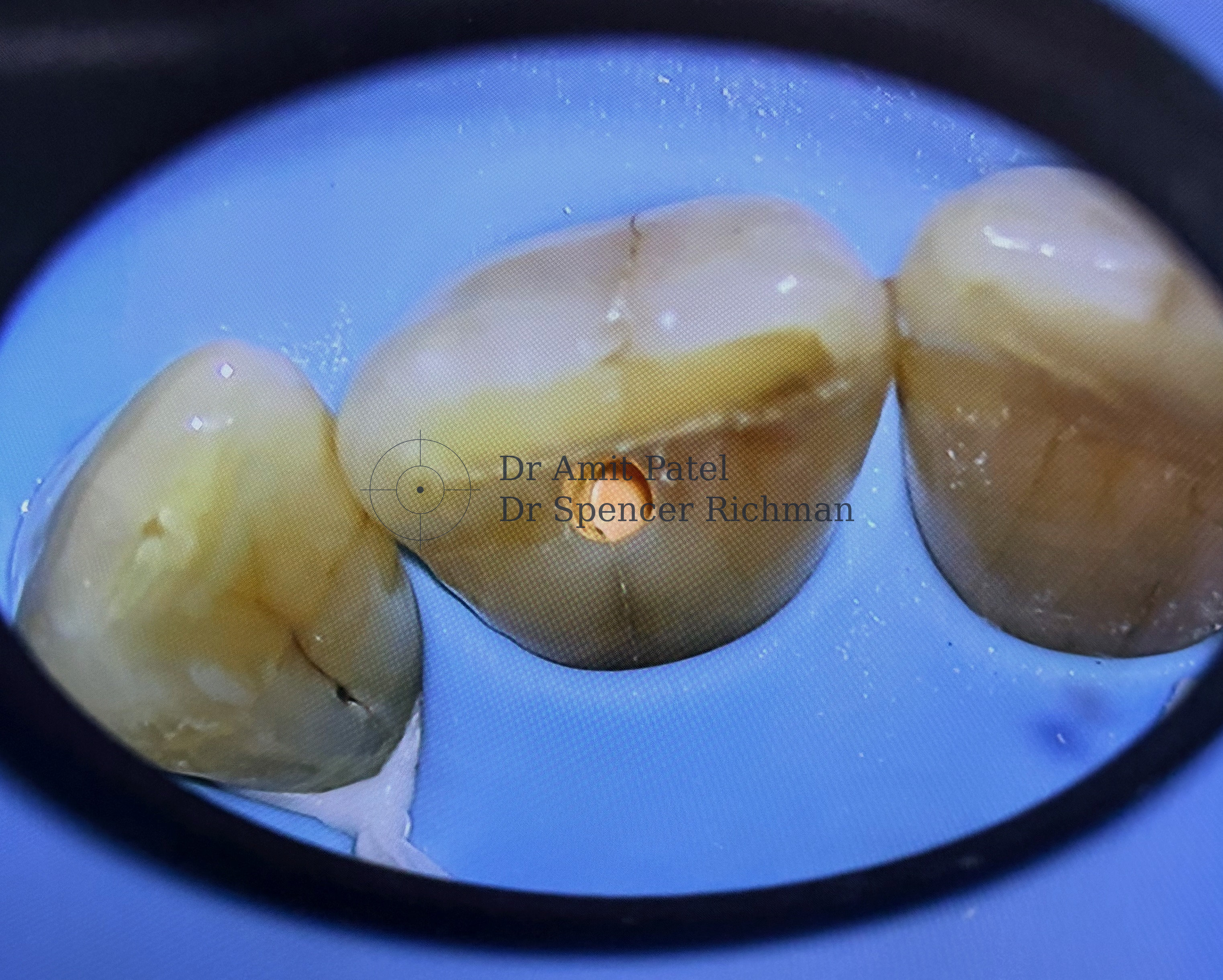
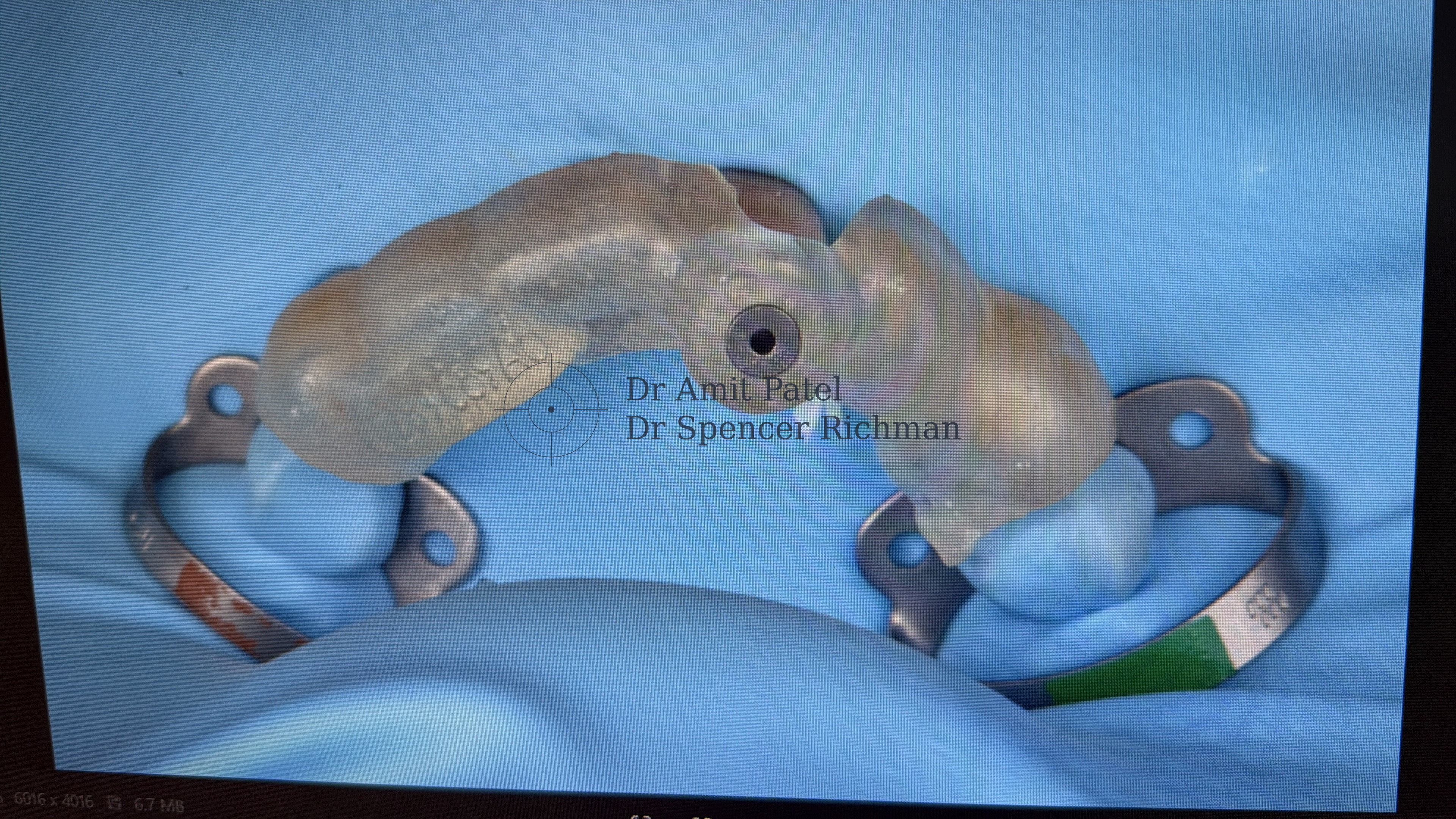
Guided endodontics clinical caseGuided endodontics clinical case
For patients
Using a CBCT scan, I create a detailed 3D plan of your tooth before treatment begins. From that plan, a custom guide is produced that allows me to reach the canal along a precise, pre-planned path - conserving as much healthy tooth as possible and avoiding unnecessary drilling. For you, that means safer, more conservative treatment, and a better chance of saving a tooth that might otherwise have been considered untreatable.
For referring dentists
Guided endodontics combines CBCT planning with a 3D-printed guide to achieve accurate, minimally invasive access in calcified or pulp-canal-obliterated cases. It significantly reduces the risk of perforation and excessive dentine removal when locating sclerosed canals, and makes predictable treatment possible in cases that would otherwise be high-risk or referred for extraction. If you have a case with a calcified canal you're unsure about, it's exactly the kind of case I'm equipped to take on.

It's a good example of how the right planning and technology can save teeth that, not long ago, would have been lost.

Read more about guided endodontics

Common questions

What patients often ask.

Is root canal treatment painful?
Modern root canal treatment is carried out under local anaesthetic and most patients find it no more uncomfortable than a routine filling. The procedure relieves the pain that brought you in.
Wouldn't it be easier to extract?
Saving your natural tooth is almost always the better long-term option. An extraction can lead to further treatment down the line; a well-treated tooth can last for many years.
How many appointments will I need?
In the majority of cases, treatment is completed in a single visit. Where a case is more complex, I'll explain clearly why a second visit is needed.
A dentist with a case to refer?
Send a referral by WhatsApp - patient name, tooth and a brief summary is all I need to get started.
Refer via WhatsApp